If you’ve ever climbed the Clash Royale ladder past 4000 trophies, you’ve almost certainly run into an opponent who drops a massive tank behind their king tower, then stacks support units behind it until their push feels completely unstoppable. You might have left that match wondering exactly what you just went up against, and how you can either counter that playstyle or use it yourself. If you’ve ever asked what is a beatdown deck in Clash Royale, this guide breaks down everything you need to know, from core mechanics to common mistakes to avoid if you want to master this high-reward archetype.
Core Traits That Define What a Beatdown Deck in Clash Royale Is
Beatdown is one of the oldest and most consistent playstyles in Clash Royale, and it’s stuck around for years because it rewards careful elixir management and strategic planning over fast reaction times. Unlike cycle decks that rely on small, repeated chip damage to wear down towers, or control decks that focus on counterpushing after stopping opponent attacks, beatdown is all about committing most of your elixir to one massive, coordinated push that your opponent can’t defend against. The average elixir cost of a standard beatdown deck usually sits between 3.8 and 4.2, which is higher than most other archetypes, so you can’t spam cards randomly if you want to find success.
Beatdown decks prioritize overwhelming opponents over fast chip damage, so you won’t see many low-cost cycle cards like Ice Spirit or Skeletons taking up multiple slots in these builds. The biggest advantage of the playstyle is that if you build your push correctly, you can often take two towers in a single attack, or even three crown a opponent if they mismanage their defense completely. The biggest downside is that if you overcommit elixir and your push gets shut down, you’ll have almost no resources left to stop their counterpush, which can lead to you losing a tower in seconds.
You can usually tell you’re facing a beatdown deck within the first 30 seconds of a match. If your opponent waits to make the first move, then drops a 5+ elixir tank behind their king tower instead of at the bridge, they’re almost certainly running a beatdown build. Many new players make the mistake of attacking immediately when they see that tank drop, but that’s exactly what the beatdown player wants you to do, because you’ll waste elixir that you need to defend their incoming push.
Key Components of a Winning Beatdown Deck Build
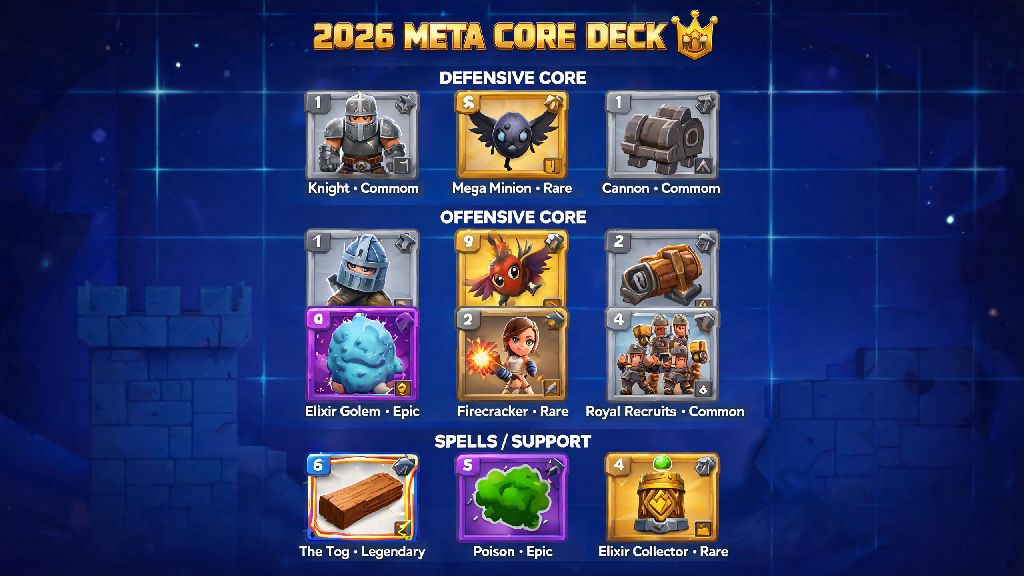
When you’re putting together your first beatdown deck, there are a few non-negotiable components you need to include to make it work. You can swap out individual cards to fit the current meta or your personal playstyle, but skipping any of these core parts will leave your build weak and easy to counter. The four must-have parts of any functional beatdown deck are:
- A high-health primary tank that absorbs all incoming damage for your support units, typically costing 5+ elixir, with popular options including Giant, Golem, P.E.K.K.A, and Lava Hound
- At least two area-of-effect support units that clear swarms and deal consistent damage behind your tank, like Witch, Electro Wizard, Baby Dragon, or Executioner
- One heavy spell to take out mid-range defensive units like Inferno Towers or stacked Wizards in one hit, with Lightning and Fireball being the most common picks
- One low-cost cycle card to help you rotate through your deck faster when you need to pull your tank quickly, usually costing 2 or 3 elixir like Ice Golem, Goblins, or Spear Goblins
Never skip adding a low-cost cycle card to your beatdown build, even if you think you don’t need it. It’s incredibly common to get stuck with four high-cost cards in your hand right when you need to defend a fast Hog Rider or Miner counterpush, and a cheap cycle card lets you rotate through your deck to pull your defensive units faster. It also lets you sneak in small chip damage when your opponent is low on elixir after defending your push.
Lightning is the most popular heavy spell for beatdown decks because it can take out up to three units at once if they’re clustered properly. If your opponent drops an Inferno Tower, Wizard, and Musketeer to defend your push, a well-placed Lightning can wipe all three out in one hit, leaving your tank completely unopposed for the rest of its walk to the tower. If you’re running a cheaper Giant beatdown build, Fireball works too, but it won’t take out higher health units like Inferno Tower in one hit.
Pro Playstyle Tips for Using Beatdown Decks Effectively
The biggest mistake new beatdown players make is dropping their primary tank at the bridge as soon as they have enough elixir to afford it. That might seem like a good way to apply fast pressure, but it leaves you with almost no elixir left to add support units, so your opponent can easily take out the tank with a single defensive building or unit. You’ll also have no elixir left to defend if they push the opposite lane right after.
Wait until you have at least 10 elixir before dropping your primary tank behind your king tower so you have enough elixir left to add support units as it crosses the map. As the tank walks towards the bridge, you can add support units behind it one by one, making sure you always keep 2 to 3 elixir reserved in case your opponent pushes the other lane. If they do push the opposite side, you can use your reserved elixir to drop a defensive unit to stop their attack, then go back to building your main push.
If you’re new to what is a beatdown deck in Clash Royale, start with a Giant-based build first, since it’s cheaper and more forgiving than Golem or Lava Hound builds. Golem costs 7 elixir, so dropping one leaves you with almost no room for error if your push gets stopped, while Giant only costs 5, so you have more leftover elixir to defend counterpunches. Once you get comfortable with Giant beatdown, you can move on to more expensive, higher-reward tanks like Golem or Lava Hound.
Don’t panic if your first push only takes out 50% of the opponent’s tower. Many new players overcommit extra elixir to finish off the tower immediately, which leaves them defenseless for the counterpush. Instead, reset back to your side of the map, build up your elixir again, and launch a second push. The leftover tower damage from your first attack means you won’t need as big of a push to take it down the second time around.
Common Counters to Beatdown Decks (And How to Play Around Them)
Beatdown decks are incredibly strong, but they do have a few consistent counters that can shut down your pushes completely if you don’t know how to play around them. The first and most common counter is the Inferno Tower, which deals increasing damage over time and can melt even a full-health Golem in seconds if you leave it unaddressed.
The easiest way to play around an Inferno Tower is to hit it with a Lightning spell as soon as it drops, which will take it down to very low health so your support units can finish it off quickly. If you don’t have Lightning in your deck, you can use a Zap or Electro Wizard to reset its damage counter, which gives your tank extra time to destroy it before it can deal full damage. You can also drop a Mini P.E.K.K.A next to it to take it out in a few hits, as long as you have extra elixir to spare.
Swarm decks that rely on Minion Horde, Skeleton Army, and Goblin Barrel are another common counter to beatdown builds, since they can take out your support units and tank quickly if you don’t have area of effect damage ready. Make sure you always have an area of effect support unit or a spell like Arrows in hand when your push crosses the bridge to clear swarms immediately when they drop.
Always keep at least one spell in hand when your push crosses the bridge to deal with unexpected defensive units the opponent drops. It’s incredibly frustrating to build a perfect push for 30 seconds, only to have it shut down by a surprise Skeleton Army because you used your Arrows 10 seconds earlier on a random Goblin Barrel. If you’re running a heavier build, you can even carry two spells to cover both swarms and heavy defensive buildings.
Whether you’re a new player looking for a consistent ladder climb strategy or a veteran wanting to shake up your current deck rotation, understanding what is a beatdown deck in Clash Royale opens up a whole new way to play the game. Take the time to test different core tanks and support combinations to find the build that fits your playstyle, and don’t get discouraged if you lose a few matches while you learn the elixir management rhythm. Once you master how to build and play beatdown decks correctly, you’ll be surprised how quickly you can climb the trophy ladder and take down even the most meta counter decks.