If you’ve ever spent hours grinding for a new legendary card, or shelled out a few bucks for a Pass Royale to get that exclusive emote you’ve been eyeing, you’ve probably wondered how much money did Clash Royale make over its years as one of the world’s most popular mobile strategy games. First launched in 2016 by Finnish studio Supercell, the fast-paced PvP title blew up immediately, blending the familiar lore of Clash of Clans with quick 3-minute matches that fit perfectly into commutes, school breaks, or even the 10 minutes you spend waiting for your food to arrive. Even as mobile game trends come and go, Clash Royale has maintained a loyal core player base that keeps its revenue streams steady year after year, even when competing titles launch with flashy graphics or bigger marketing budgets.
How Much Money Did Clash Royale Make Total Since Launch?
As of 2024, Clash Royale has grossed over $4 billion globally across iOS and Android platforms, according to leading mobile analytics firms. That makes it one of the top 20 highest-grossing mobile games of all time, right alongside sister titles Clash of Clans and Brawl Stars from Supercell. The bulk of that revenue came in its first three years, with 2018 being its highest grossing year at over $750 million in global earnings. Even in recent years, as competition in the mobile strategy space has heated up, the game still pulls in an average of $250 to $300 million per year, a clear sign of its sustained popularity with casual and competitive players alike.
That figure is even more impressive when you consider that Supercell has never relied on predatory monetization tactics to drive earnings, unlike many other free-to-play mobile games. Most players never spend a single cent on the game, and the revenue comes entirely from a small subset of dedicated players who choose to pay for extra perks and cosmetic items.
Core Revenue Streams That Drive Clash Royale’s Earnings
Almost all of Clash Royale’s revenue doesn’t come from ads, which is a deliberate choice by Supercell to keep the game experience as smooth and uncluttered as possible. The studio has stated multiple times that intrusive ads would hurt long-term player retention far more than any short-term revenue they would generate, so 98% of the game’s earnings come from optional in-app purchases. These varied, optional revenue streams are the exact reason how much money did Clash Royale make never came at the cost of user experience. The three core revenue streams are:
- Pass Royale: The monthly subscription tier introduced in 2019 is now the single largest revenue driver, accounting for 45% of all in-app purchases. It unlocks exclusive skins, faster progression, bonus rewards, and automatic chest unlocking for around $4.99 per month, and most regular players who spend money on the game subscribe to this tier first.
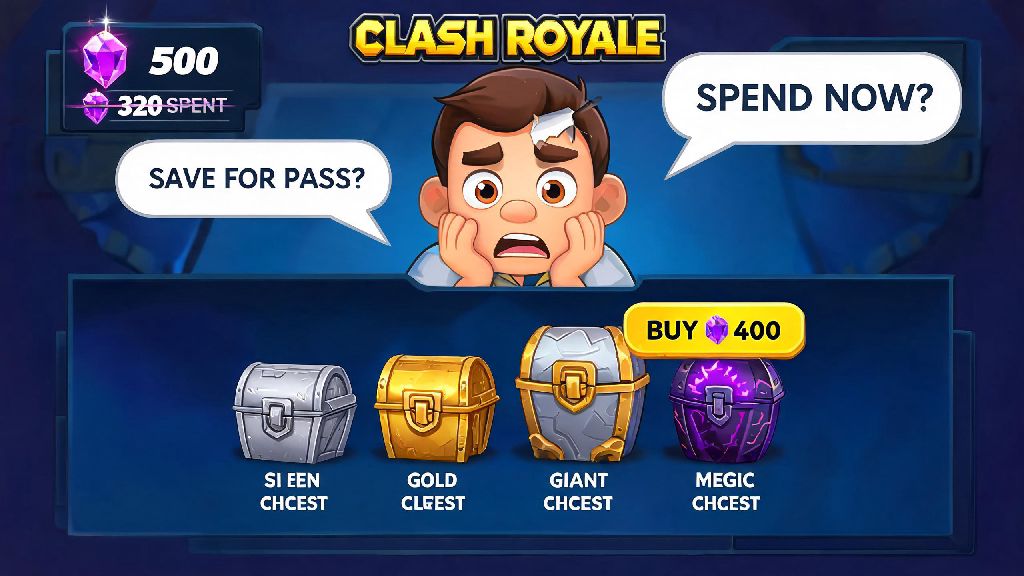
- One-time gem purchases: Gems are the game’s premium currency, used to unlock chests instantly, buy gold, purchase special limited-time card offers, and entry into paid competitive tournaments. Gem packs range from $0.99 for 80 gems up to $99.99 for 14,000 gems, and make up 35% of total revenue, with most purchases coming from players looking to speed up progression for a specific meta deck.
- Limited-time cosmetic bundles: Seasonal skins for towers, custom emotes, and unique card backs that are only available for a few weeks at a time make up the remaining 20% of in-app revenue. These are especially popular with long-time players who want to show off their unique collections to opponents during matches, and rare exclusive emotes are often seen as a status symbol in the Clash Royale community.
You won’t find any forced pop-up ads or rewarded video ads cluttering the game interface, which is a big part of why players stick around for years. Even the paid content is entirely optional, so players never feel pressured to spend money to enjoy the core 1v1 match experience, climb the ranked ladder, or play with friends in private tournaments.
Top Earning Regions For Clash Royale
Clash Royale’s player base is spread across almost every country in the world, with over 500 million total downloads as of 2024, but a small handful of markets contribute the majority of its total revenue. The United States is the top earning market, accounting for 28% of all global revenue, followed by Japan at 17% and Germany at 9%.
The US’s large population of mobile gamers, high disposable income, and prevalence of credit card usage on app stores make it an easy leader for most high-grossing mobile games. Japan’s high spend per player is the biggest driver of its second place spot, as the average Japanese Clash Royale player spends 3x more per year than the global average, mostly on limited-time cosmetic items and Pass Royale subscriptions.
Emerging markets like India and Brazil have huge player bases, making up over 30% of global downloads, but lower average spend per user means they contribute far less to total revenue. Supercell has rolled out regional pricing for Pass Royale and gem packs in many of these markets in recent years to make purchases more accessible, which has led to slow but steady growth in revenue from these regions.
How Recent Game Changes Have Impacted Clash Royale’s Revenue
Supercell regularly rolls out balance changes, new cards, and seasonal updates to keep the game fresh, and these changes often have a direct and immediate impact on monthly revenue. For example, the 2023 introduction of Level 15 and Elite Wild Cards led to an 18% spike in monthly revenue, as long-time players spent money to upgrade their favorite meta cards to the new maximum level ahead of competitive tournament seasons.
But not all changes are received well. The 2022 update that introduced Level 14 was met with widespread backlash from the community, as players felt the progression gap between free-to-play and paying players had grown too large to be fair. That update led to a 12% drop in revenue in the following quarter, as many long-time players cut back on spending or quit the game entirely in protest.
Community feedback directly shapes Supercell’s monetization choices, as the studio knows that alienating its loyal player base will hurt long-term revenue far more than any short-term gain from a controversial update. Supercell adjusted progression rates to be far more generous for free-to-play players in 2023, and revenue has fully recovered to pre-2022 levels as of 2024. The studio also regularly hosts limited-time events and cross-promotions with other Supercell games to drive temporary spikes in spending, like the 2024 Brawl Stars crossover that added exclusive Brawl Stars themed emotes and tower skins to Clash Royale for a limited two-week window.
At the end of the day, the total figure for how much money did Clash Royale make is a testament to how well Supercell has balanced optional monetization with fun, accessible gameplay for almost a decade. Unlike many free-to-play games that rely on pay-to-win mechanics or intrusive ads to turn a profit, Clash Royale has proven that you can make billions of dollars while still respecting the time and money of your player base. Whether you’re a free-to-play player who has never spent a cent on the game, or a long-time spender who has collected every exclusive emote released, you’re part of the community that has made Clash Royale one of the most successful mobile games of all time.