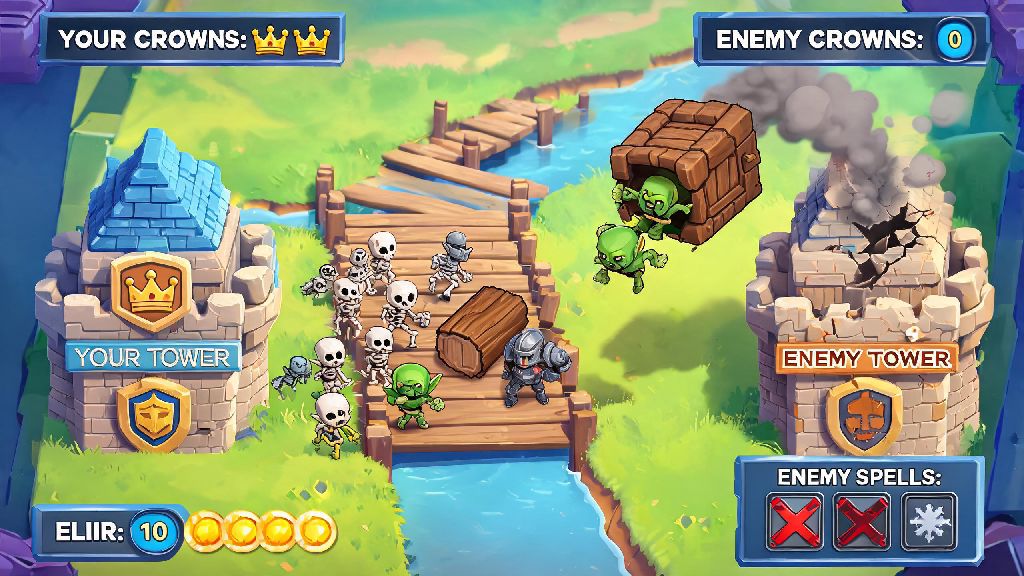
If you’ve ever stared at your Clash Royale card collection wondering why your decks keep getting steamrolled by players 200 trophies lower than you, you’re not alone. I’ve spent 4 years grinding ladder matches, testing hundreds of combinations, and failing spectacularly more times than I can count before I nailed the core rules of building functional, winning lineups. Learning how to make good Clash Royale decks doesn’t require you to copy every pro build you see online, either—it’s about balancing core mechanics with your own preferred way to play. You don’t need every new legendary card to build a deck that carries you through Arena 15 and beyond, as long as you stick to a few basic rules.
Core Rules to Follow When Learning How to Make Good Clash Royale Decks
Every winning Clash Royale deck follows the same basic structural rules, no matter what playstyle it’s built for. These rules were developed through years of pro play and balance updates, and they work for every arena level and trophy range. First, ideal average elixir cost for most ladder decks sits between 3.5 and 4.0. Decks under 3.0 usually lack the high-damage units you need to break through strong defenses, while decks over 4.5 leave you vulnerable to fast cycle rushes when you spend most of your elixir on a single heavy unit. Next, every deck needs a clearly defined primary win condition—this is a unit that directly targets towers, like Hog Rider, Balloon, Golem, or Miner, not a support unit that only attacks enemy troops. Finally, you need at least 2 counters for the most common meta win conditions at your trophy rank, so you don’t get stuck helpless when an opponent drops their signature push.
Before you save any new deck you build, make sure it hits all of these non-negotiable requirements first:
I see so many new players skip these components because they want to cram all their favorite legendary cards into one deck, and that’s almost always a recipe for failure. For example, if you build a deck with a Balloon win condition but no spell to clear air targeting units like Inferno Tower or Musketeer, you’ll never get a single hit on an opponent’s tower.
Adjust Your Deck to Match Your Playstyle, Not the Meta
The latest meta build you see on social media might be winning 70% of matches for pro players, but if you hate playing slow, heavy Golem decks, you’ll never get that win rate yourself. Your playstyle is the biggest predictor of how well you’ll perform with any deck, so don’t force yourself to use builds that feel uncomfortable. If you love fast, aggressive plays where you’re constantly applying pressure to your opponent’s tower, stick to cycle decks with low elixir cost and cheap win conditions like Hog Rider or Miner. If you prefer slow, calculated plays where you build up a huge push over time and counter attack for massive damage, go for beatdown decks with heavy win conditions like Golem or Pekka.
But even if you’re copying a meta build to start, don’t be afraid to swap 1 or 2 cards to fit your preferences. For example, if a meta Hog deck uses Goblin Barrel but you’re terrible at timing Goblin Barrel placements to avoid Log counters, swap it for Miner instead—you’ll have much better results than trying to force a card you don’t know how to use. I’ve seen players drop 300 trophies in a day just because they tried to switch to a meta build that didn’t fit their playstyle, so don’t make that same mistake.
Test and Tweak Your Deck Over 10+ Matches Before Making Changes
A lot of new players will lose one match with a new deck and immediately swap out half the cards, but that’s the worst way to build a functional lineup. Most decks take 5 to 10 matches to learn properly, because you need to figure out the right elixir trades, push timings, and counter plays that work for that specific combination of cards. Don’t judge a deck’s performance based on 1 or 2 bad matches—sometimes you just get matched against a hard counter, and that’s not a flaw in the deck itself. For example, even the best Hog cycle deck will struggle against a player running three separate Hog counters, and that’s not a sign you need to scrap your entire build.
When you do test your deck, keep mental notes of what keeps beating you. If you keep losing to Balloon decks, swap out a low-value card for an air targeting unit like Baby Dragon or Musketeer. If you keep running out of elixir during pushes, swap a high-cost card for a cheaper alternative to bring your average elixir cost down by 0.1 or 0.2. The best decks aren’t built in 5 minutes—they’re tweaked over weeks of play to fix gaps and work around your personal weaknesses as a player. I once spent a month tweaking my Miner cycle deck, swapping 1 card at a time every 10 matches, and by the end I’d pushed from 5200 trophies to 6100 without changing my core playstyle at all.
Avoid These Common Deck Building Mistakes That Kill Win Rates
Even if you follow all the core rules, small mistakes can sink your deck’s performance before you even play a single match. Never build a deck with more than one heavy win condition—for example, pairing Golem and Pekka will make your average elixir cost way too high, and you’ll never have enough elixir to support both during a push. You’ll end up stuck with no elixir to defend against a rush while your Golem is still walking across the bridge, and you’ll lose half your tower health before you even get a chance to attack.
Another common mistake is including too many spells: 2 to 3 spells is ideal, any more than that and you’ll lack the units you need to build pushes or defend against attacks. You also don’t want to build a deck that only counters one specific meta build, because the meta changes every time Supercell rolls out a balance update. If your entire deck is built to counter Hog Rider, you’ll get destroyed the second the meta shifts to Balloon or Miner decks.
One mistake I see all the time is players adding cards just because they’re newly released or rare. A level 11 common card will almost always perform better than a level 9 legendary card, so prioritize leveled up cards you use often over shiny new cards you haven’t upgraded at all. It’s far better to build a deck full of maxed common and rare cards you know how to use, than a deck full of under-leveled legendaries that look cool but don’t deal enough damage or take too many hits to kill enemy units.
At the end of the day, building winning Clash Royale lineups is a mix of basic math, self-awareness of your playstyle, and a little bit of trial and error. You don’t need to be a pro player or spend hundreds of dollars on cards to build a deck that climbs ranks consistently, as long as you stick to the core rules we covered. Taking the time to learn how to make good Clash Royale decks that fit your unique playstyle will get you far better results than copying every random meta build you see online. Next time you’re tinkering with your card collection, test your changes over a few matches, adjust for gaps in your defense, and don’t be afraid to ditch cards that don’t feel fun to use. You’ll be shocked how fast your trophy count climbs when you’re playing a deck you actually enjoy, instead of one some pro says is the best.