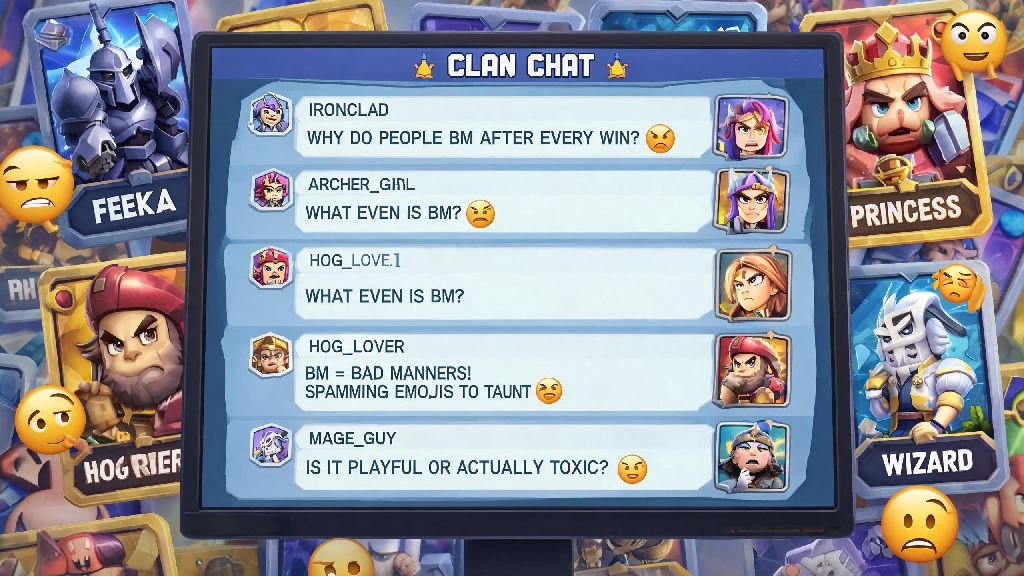
If you’ve hopped into Clash Royale matches in 2026, you’ve probably seen players tossing around the term “bming” in clan chats, post-match reactions, or even official community forums. If you’re new to the scene, you might be asking what is bming in Clash Royale, and whether it’s a harmless joke or a toxic behavior you should avoid. As someone who’s been active in the global Clash Royale competitive and casual scene for 7 years, I’ve watched this term evolve drastically, especially as the 2026 cross-platform play update brought millions of new players to the game. This guide breaks down everything you need to know, from its origins to unspoken community rules around using it appropriately.
What is Bming in Clash Royale, Exactly? Origins & 2026 Definition
Bming is short for “bad manners”, a term that originated in early 2010s competitive gaming circles before making its way to Clash Royale shortly after the game’s launch. In 2026, the definition has narrowed specifically to unsportsmanlike, unnecessary actions taken to annoy, mock, or frustrate an opponent during or after a match. It’s never tied to in-game performance itself – you can play hyper aggressively, run meta decks, or make last-second comeback plays without ever being guilty of bming. The line is drawn when your actions are clearly intended to make the other player feel bad, rather than just playing to win. Many new players don’t even realize they’re committing bming until someone calls them out, which is why learning what is bming in Clash Royale is so important for new players joining in 2026.
Common Bming Actions You’ll See in 2026 Clash Royale Lobbies
After the 2026 spring emote pack update added 12 new interactive emotes, there are more small ways players engage in bming than ever before, even if they don’t realize it. The most common examples you’ll run into in casual or ladder play include:
It’s worth noting that not all emote use counts as bming. If you and your opponent are both sending playful thumbs up or “nice play” emotes during a close, back-and-forth match, that’s friendly banter, not bad manners. The only time emote use crosses the line is when it’s one-sided and intended to mock.
Is Bming Ever Acceptable in 2026 Clash Royale?
A lot of long-time players argue that light bming is part of the fun of competitive play, and there are a handful of cases where the wider community generally accepts it as harmless. First, if you’re playing against a friend or clan mate who you have an existing playful banter relationship with, light emote spamming after a win is totally fine, as long as both of you are enjoying the back and forth. You should never use bming actions against a stranger unless they’ve done it to you first – even then, many veteran players recommend ignoring it instead of stooping to the same level, because it just makes the match less fun for everyone involved.
In official 2026 Clash Royale esports tournaments, bming is explicitly banned, and players can get fined, docked points, or even disqualified for mocking opponents during official matches. But in casual ladder play, the rules are a lot looser, as long as you’re not targeting vulnerable players. You should always avoid bming against players who are clearly new or have much lower card levels than you – there’s no glory in making a new player quit the game before they get a chance to learn the ropes. I’ve had matches where an opponent started spamming laughing emotes after they took my first tower, and I came back to win, then sent a single laughing emote back. I don’t feel bad about that choice, because they initiated the hostile interaction first, but I never start that kind of behavior with players I don’t know.
How to Respond to Bming Without Encouraging Toxicity
If you’re on the receiving end of bming in a 2026 Clash Royale match, you have a few easy options that don’t involve stooping to toxic behavior. First, you can use the built-in emote mute button, which was updated in 2026 to let you mute all opponent emotes with one tap right at the start of the match if you prefer. I use this feature all the time when I’m grinding ladder for 6+ hours a day, because it lets me focus on my plays instead of getting distracted by annoying emote spams.
Second, if the bming extends beyond the match into chat, you can report the player directly through the post-match screen, and Supercell’s 2026 updated moderation algorithm usually acts on reports within 10 minutes for obvious toxic behavior. Most of the time, the best response to bming is no response at all – players who bming are usually looking for a reaction, and if you don’t give them one, they’ll get bored and move on to the next match without bothering you further. You can also choose to send a neutral “good game” emote at the end of the match regardless of how they acted, which usually throws them off and discourages them from bming in future matches.
At the end of the day, understanding what is bming in Clash Royale is all about reading community context and treating other players the way you want to be treated. Clash Royale is meant to be a fun, competitive game, and a little bit of playful banter never hurts, but it’s important to know where the line is between a joke and harassment, especially as the 2026 player base grows more diverse every month. If you stick to the unspoken rules we covered here, you’ll be able to enjoy your matches without making other players feel unwelcome, and you’ll avoid getting a reputation as a toxic player in your local or clan communities.