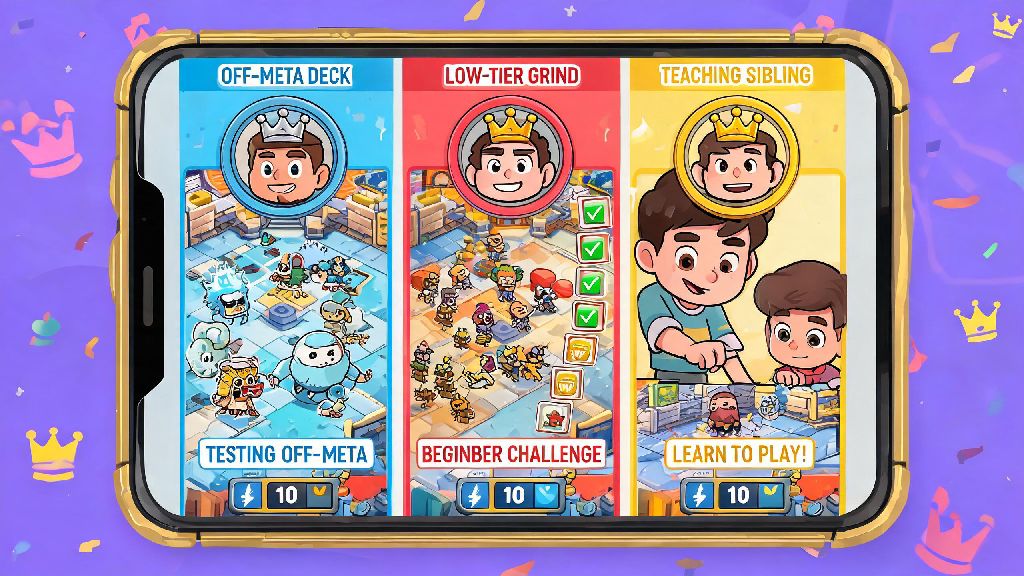
If you’ve ever queued for a ranked match only to get steamrolled by a player spamming a meta deck you’ve never seen before, you’re not alone. Most new players jump into ranked without a clear plan, waste hundreds of trophies on avoidable mistakes, and end up stuck in lower leagues for months. This guide breaks down exactly how to play ranked Clash Royale to climb steadily, no pay-to-win shortcuts or perfect reflexes required. All the tips below come from hundreds of hours of play and testing across 10+ seasons of ranked matches.
How to Play Ranked Clash Royale: First, Understand the Ranked System Basics
Before you even queue for your first ranked match, it’s critical to know how the system works so you don’t waste energy stressing over rules you don’t understand. Ranked play (also called ladder play) is split into 10 leagues, starting at Challenger 1 for players with 4000 trophies, up to Ultimate Champion for the top 10,000 players in the world. Every two weeks, a season reset drops you back a small number of trophies based on your highest league the previous season, so you never have to start completely over.
You won’t lose any trophies for losses if you’re below 4000 total trophies, so that’s the perfect range to test different decks and practice your playstyle without penalty. The matchmaker pairs you with players within 50 to 100 trophies of your current count, so you’ll almost never face someone with drastically higher skill or card levels unless you’re on a long win streak. That means every loss is a learning opportunity, not a sign you’re matched against someone unbeatable.
You also earn star points for every win once you hit level 13, which you can use to unlock golden cosmetics for your maxed cards. These don’t give any in-game advantage, but they’re a fun bonus for consistent play, and you’ll rack them up far faster once you start winning more ranked matches.
Build a Ranked-Optimized Deck That Fits Your Playstyle
The biggest mistake new ranked players make is copying the top meta deck straight from leaderboards without testing it first. A deck that works for a top 100 Ultimate Champion player won’t work for you if you don’t know the matchups or elixir rotations, and you’ll end up losing more matches than you win. The best ranked decks are balanced, fit your preferred play style, and have answers for all common meta threats.
Every strong ranked deck has four core components, no matter what playstyle you prefer:
- 1 win condition: This is your primary way to deal damage to the opponent’s king or princess towers (examples: Hog Rider, Miner, Balloon). It should be the card you build your entire deck around, so pick one you enjoy using.
- 2-3 defensive units: Units that can counter common win conditions without leaking too much elixir (examples: P.E.K.K.A., Inferno Tower, Valkyrie). Pick units that cover multiple threats: a Valkyrie, for example, counters both swarms of goblins and medium-health units like the Wizard.
- 2 spells: One small spell for clearing swarms (Zap, Arrows, Log) and one big spell for finishing low towers or taking out grouped high-health units (Fireball, Rocket, Poison). Avoid running more than 3 spells, as you’ll be left without enough units to defend or push.
- 1-2 cycle cards: Low-elixir cards that let you cycle through your deck fast to get to your win condition quicker (examples: Ice Spirit, Skeletons, Goblins). These also let you make small, low-risk plays to chip away at enemy towers without overcommitting elixir.
Never swap more than 2 cards in your deck at a time, because changing too much will mess with your muscle memory for elixir counts and rotations. Test any deck changes in friendly 1v1 matches first, so you don’t waste trophies learning how the new cards work against common meta decks. If you win 6 out of 10 test matches, the deck is good enough to take to ranked.
Master Elixir Management to Win More Close Ranked Matches
80% of close ranked matches are won by the player who manages their elixir better, not the player with the better deck or faster reflexes. The average new player wastes 2 to 3 elixir per match on unnecessary plays, which is enough to give their opponent a massive advantage for most of the game. The core rule of elixir management is simple: never play a card just because it’s in your hand.
Wait for your opponent to make the first move whenever possible, so you can counter their play for less elixir than they spent. For example, if they drop a Hog Rider at the bridge, counter with a 3-elixir Cannon instead of a 7-elixir P.E.K.K.A. That leaves you with 4 extra elixir to launch a counter push on the same lane, while they’re stuck waiting for their elixir to regenerate. Even a 1-elixir advantage adds up over the course of a match.
Always count your opponent’s elixir as closely as you count your own. If they just used a 7-elixir P.E.K.K.A on one lane, they have a maximum of 3 elixir left, so you can push the opposite lane with your win condition and a support unit right away. They won’t have enough elixir to defend both lanes, so you’ll almost always get at least a few hundred tower damage, if not a full tower take down.
Don’t chase small chip damage in the first two minutes of the match. It’s far better to hold onto your elixir and build a 3 to 4 elixir advantage than to waste cards dealing 100 extra damage to a princess tower. Most ranked matches are decided in the final 30 seconds or overtime, so saving your big pushes for that window will win you far more games.
Avoid These Common Ranked Clash Royale Mistakes That Kill Your Win Rate
Even if you have a perfect deck and great elixir management, small, repeated mistakes can tank your win rate and keep you stuck in lower leagues. Most of these mistakes come from impatience or tilting, and they’re easy to fix once you know what to look for. I’ve made every single one of these mistakes myself, including losing 400 trophies in a single hour because I refused to take a break after a bad loss streak.
Tilting is the single biggest win rate killer for ranked players. If you lose two matches in a row, step away from the game for at least 10 minutes. When you’re frustrated, you’ll make impulsive, bad plays like overcommitting to a push or wasting spells on useless targets, and you’ll keep losing until you calm down. I keep a small snack next to my desk when I play ranked, so I can take a break and eat something if I start feeling frustrated.
Another common mistake is ignoring your defense to push a lane. If you have a Giant heading for your left princess tower, don’t drop a Balloon on the right lane first. Defend the Giant with a low-elixir counter first, then use the surviving defensive units to launch a counter push on the same lane. That way you don’t risk losing a tower for a small chance at dealing chip damage to the opponent’s tower.
Never use your only big spell on a minor defensive target if you haven’t seen all of your opponent’s deck yet. If you waste your Fireball on a group of Goblins early on, you’ll have no way to counter their Wizard or Electro Giant later in the match when it matters most. Wait until you’ve seen at least 6 of their 8 cards before you use your big spell on a non-critical target.
At the end of the day, learning how to play ranked Clash Royale doesn’t require perfect reflexes or a full collection of maxed cards. It’s about making small, smart choices every match, learning from your losses, and sticking to a deck you’re comfortable with instead of chasing every new meta trend. You won’t hit Ultimate Champion in a week, but if you apply the tips we covered, you’ll see your win rate go up by 15 to 20% almost immediately, and your trophy count will climb steadily every season. Don’t forget to have fun along the way too — getting frustrated over a lost match takes away the whole point of playing the game.